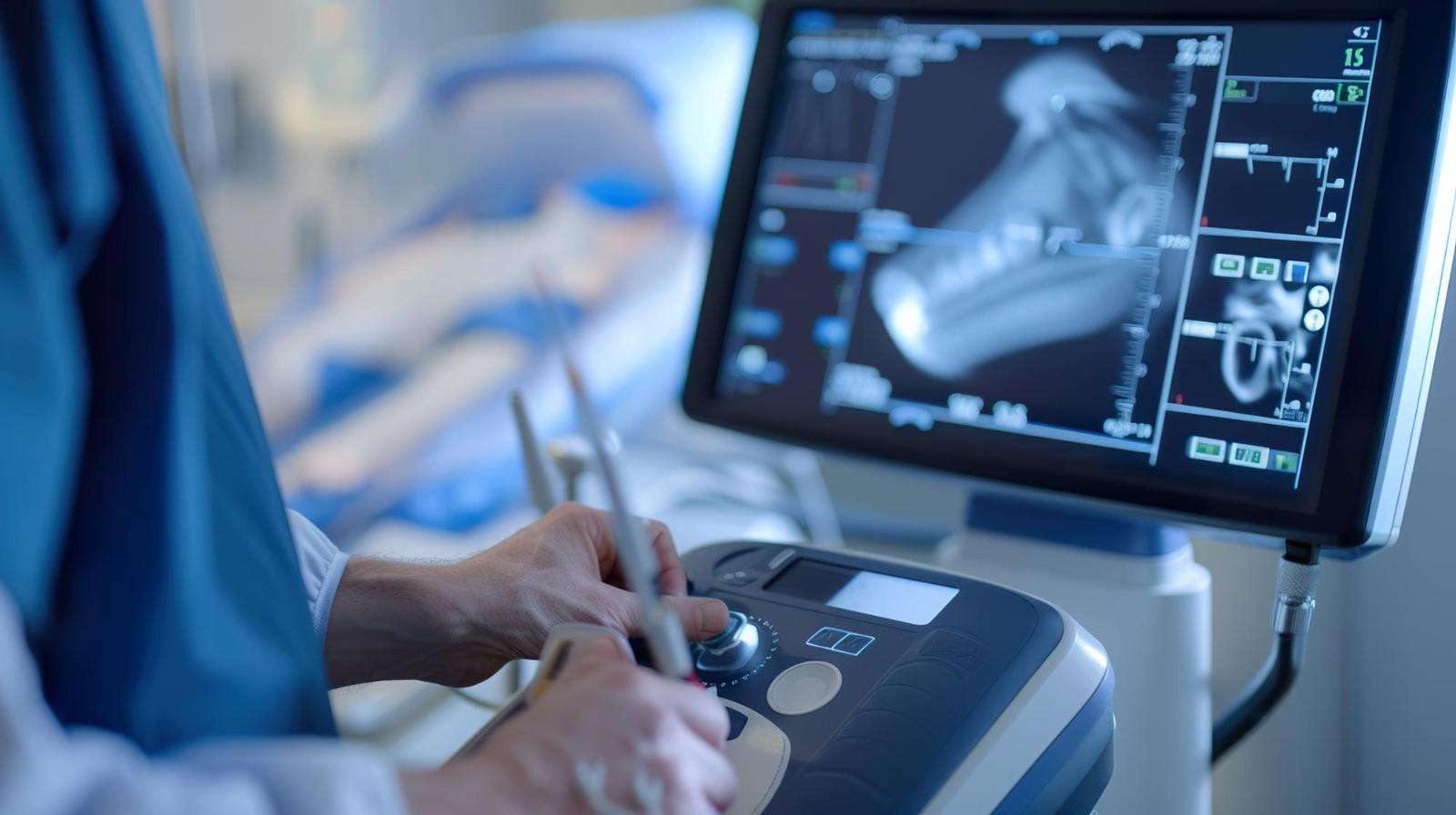
An echocardiogram is an ultrasound test that checks the structure and function of your heart. An echo can diagnose a range of conditions including cardiomyopathy and valve disease. There are several types of echo tests, including transthoracic and transesophageal. Talk with your provider about the type that’s best for you.
Echocardiography uses no radiation. This makes an echo different from other tests like X-rays and CT scans that use small amounts of radiation. This helps the provider evaluate the pumping action of your heart. Providers often combine echo with Doppler ultrasound and color Doppler techniques to evaluate blood flow across your heart’s valves.
Echocardiography (ECHO) is a non-invasive imaging test that uses sound waves (ultrasound) to create detailed images of the heart. It helps assess the structure and function of the heart and its valves.
ECHO is used to diagnose and monitor heart conditions such as heart murmurs, heart failure, valve problems, congenital defects, and fluid around the heart.
No. An ECG (electrocardiogram) records the heart's electrical activity, while an ECHO provides visual images of the heart's structure and movement. Both tests may be used together for a comprehensive evaluation.
During the test, a technician applies gel to the chest area and uses a handheld device (transducer) to capture images of the heart. The procedure is painless and takes 20-40 minutes.
Yes. Common types include:
Transthoracic ECHO (TTE): Standard, non-invasive method.
Transesophageal ECHO (TEE): Uses a probe inserted into the esophagus for detailed images.
Stress ECHO: Performed during or after exercise to evaluate heart performance.
Doppler ECHO: Measures blood flow and pressure.
For most ECHO tests, no preparation is needed. If you are undergoing a Transesophageal ECHO (TEE) or Stress ECHO, your doctor may provide specific instructions, such as fasting or wearing comfortable clothes.
Yes, ECHO is a safe and non-invasive procedure. It uses sound waves, not radiation, and has no known risks.
ECHO is typically performed by a trained sonographer or cardiologist. The images are interpreted by a cardiologist to provide a detailed report.
Results are usually available shortly after the test, as the images can be reviewed immediately. Your doctor will explain the findings and their implications.
While ECHO provides valuable information about the heart's structure and function, it may not detect all conditions. Additional tests, like MRI or cardiac catheterization, may be required for further evaluation.